If you were an Internet user for a few years on either side of the turn of the millennium, you will remember pop-up advertisements.
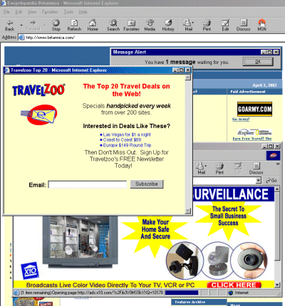
A poorly-considered web browser feature allowed website authors to open new browser windows on your computer containing some other website. This was quickly abused to show ads to users. You’d visit a website and receive an ad that covered up the contents you were there to view until you closed the ad. As the ad technology developed, the ads would use various misleading features to become more deceptive and harder to dismiss.
In a short time, the situation got so bad that web browsers started deploying built-in pop-up blocking technology to improve web browsing for their users. This was a major feature. News articles were written about it. It was a major selling point for Firefox’s first 1.0 release in 2004. Later that year, Microsoft made the news by enabling pop-up blocking by default in their popular Internet Explorer web browser.

This did fix the pop-up problem, for a time. The web browser developers had done a good job, and they moved on to implementing other features. Unfortunately, the ad developers didn’t give up.

Pop-ups are back, and they’re worse than ever. The pop-up ad developers have evolved to work around browser’s built-in pop-up blockers, but web browser developers haven’t been keeping up in the arms race. The same patterns from the early 2000s are all back again: popping up at random times to intercept your interactions; needless distractions covering up what you intended to view; misleading or difficult-to-find dismissal buttons.


It is definitely a hard problem to distinguish between “legitimate” pop-ups and advertising pop-ups. But that was true in the mid-2000s, too, when pop-up windows did have some legitimate purposes. To work around incorrect blocking, web browsers at the time implemented whole new user interface features to handle the case where a legitimate pop-up was incorrectly blocked. These UI components even persist to this day, even though almost no website uses pop-up windows anymore, so no one ever sees them.
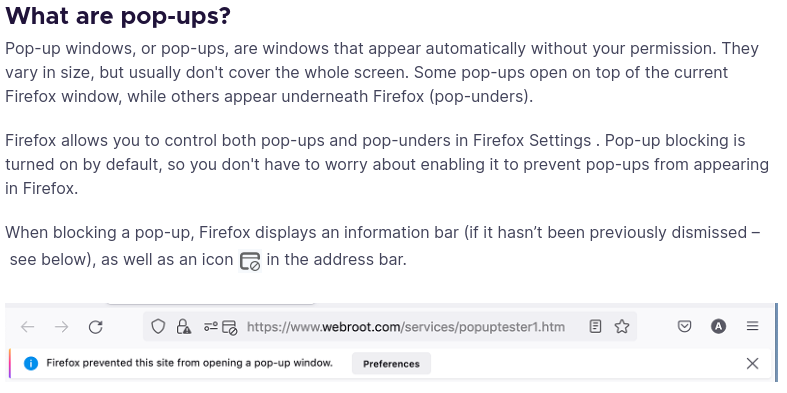
It’s time for web browser developers to give pop-up blocking another swing. Yeah it’s hard, but I guarantee it’ll make the news again if a browser pulls this off and enables it by default. Imagine the accolades a browser would get for getting rid of all these pointless distractions. It would even invigorate a new discussion about other things web browsers may do to alter websites for an improved user experience. Yes, there will be whiny news articles and opinion pieces from web developers, but these same sociopaths existed in the 2000s, too. We ignored them then, and we can ignore them now.
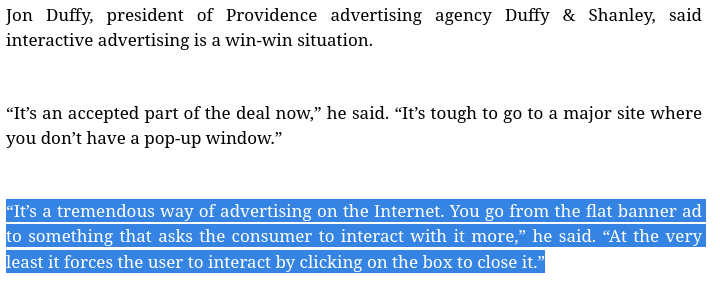
The web is a two-way street, and web browsers get to choose how they display websites. Do you want more users, Mozilla? Then build features users want and will talk about with their friends. The need for pop-up blocking has not changed in the past 25 years, and I’d argue it’s worse now than it was in the early 2000s. It was a great feature then, and it will be a great feature now. It’s time for browsers to start implementing Pop-up Blocking 2.0, enabled by default.